
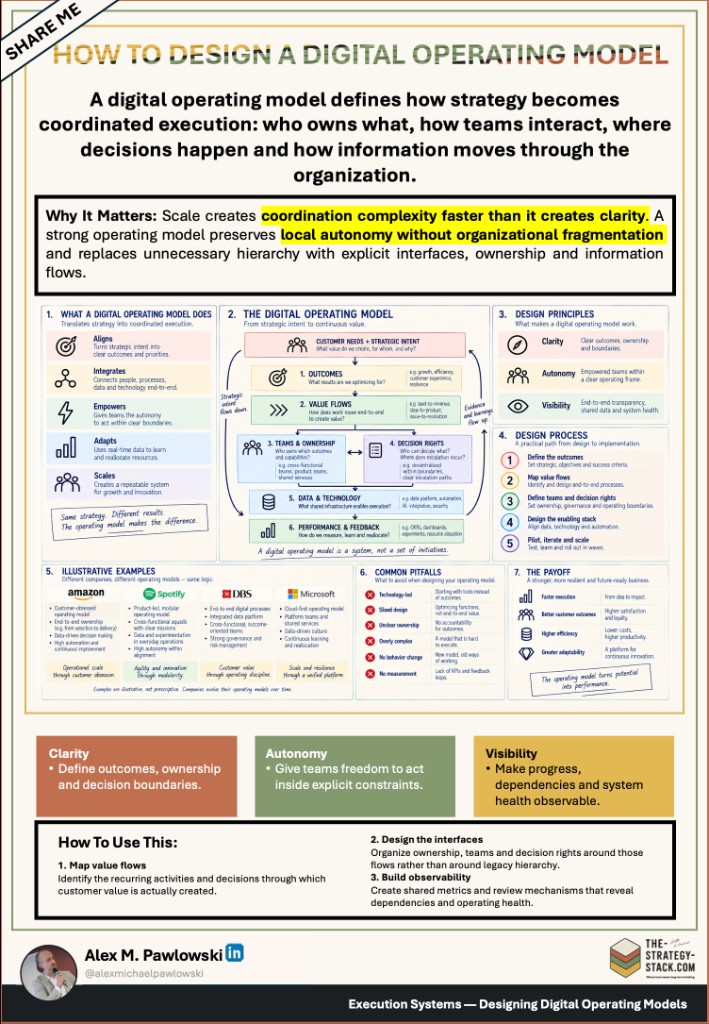
How to Design a Digital Operating Model
Defines the minimal structure required for clarity,
Strategy Content
Strategy canvases and cheat sheets for leaders, 121+ printable PDF frameworks on business models, AI strategy, mental models, and digital entrepreneurship.121 available to download now.
Frameworks you take to the leadership meeting, most cheat sheets download instantly. Paid subscribers get the full Agentic Strategy book plus exclusive canvases.
Read by professionals from companies like Amazon, AstraZeneca, Bain, BCG, Duolingo, Lenovo, Samsung, and Cisco.
Loading Operator Vault…
A curated library of meeting-ready strategy canvases and cheat sheets, printable one-page PDFs from The Strategy Stack.
Most of the library is open. A small paid tier unlocks subscriber exclusives.
121 cheat sheets across 15 curriculum tracks. New frameworks publish weekly on Business Model Sunday.
Phase I foundations and onboarding cheats are live today, more clusters roll out on a weekly cadence.
Substack publishes the narrative. The Vault packages the same ideas as printable canvases you take into workshops and leadership meetings.
Both are single-page PDFs. The format differs by how you use them in a session.
Look in three clusters across the library:
Artificial Intelligence →Intelligence Layer →AI Strategic Playbook →
Download, print or share screen, and walk the room through the framework in 10–15 minutes.
Defines the minimal structure required for clarity,
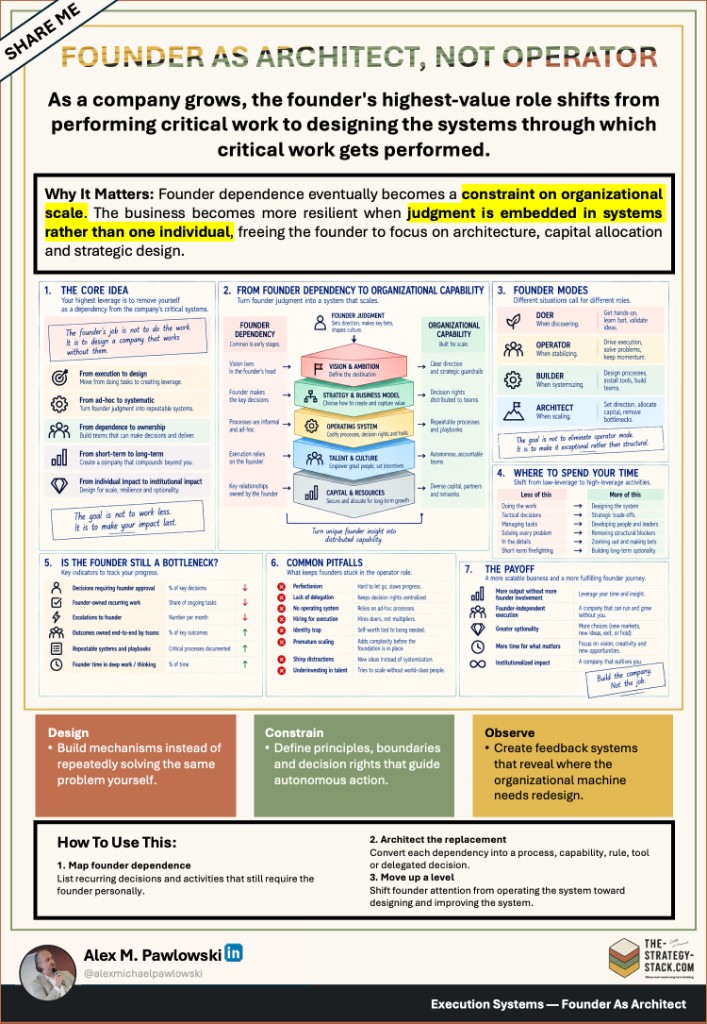
Shows the shift from doing the work to designing the
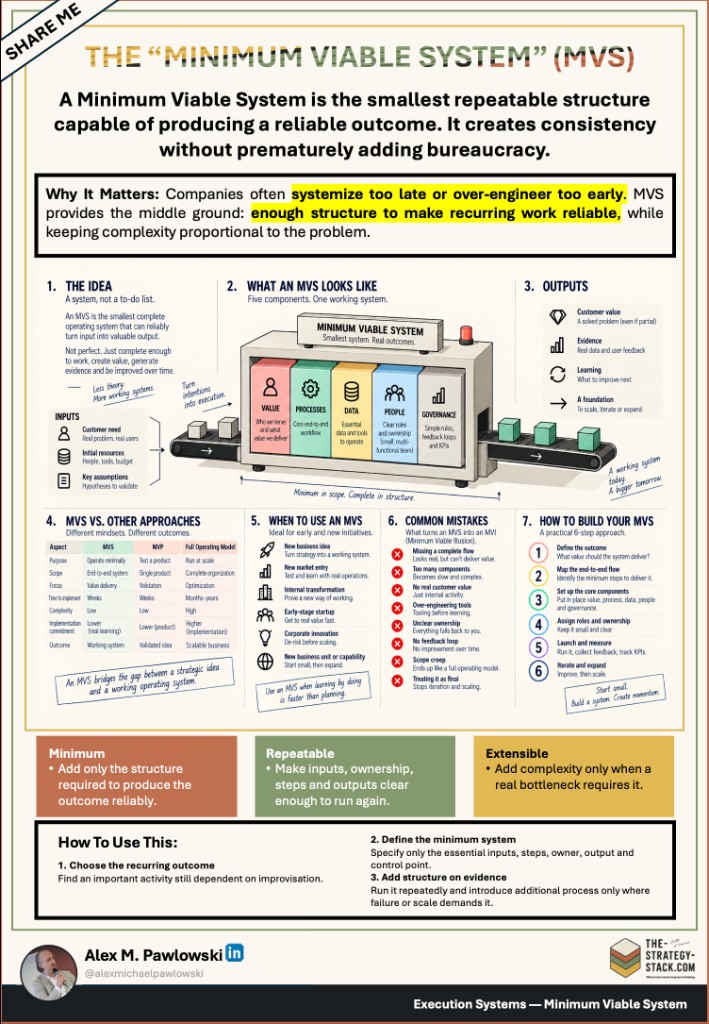
Outlines how to implement the smallest repeatable
Mental models for digital strategists, leverage, optionality, feedback loops, and how operators think.

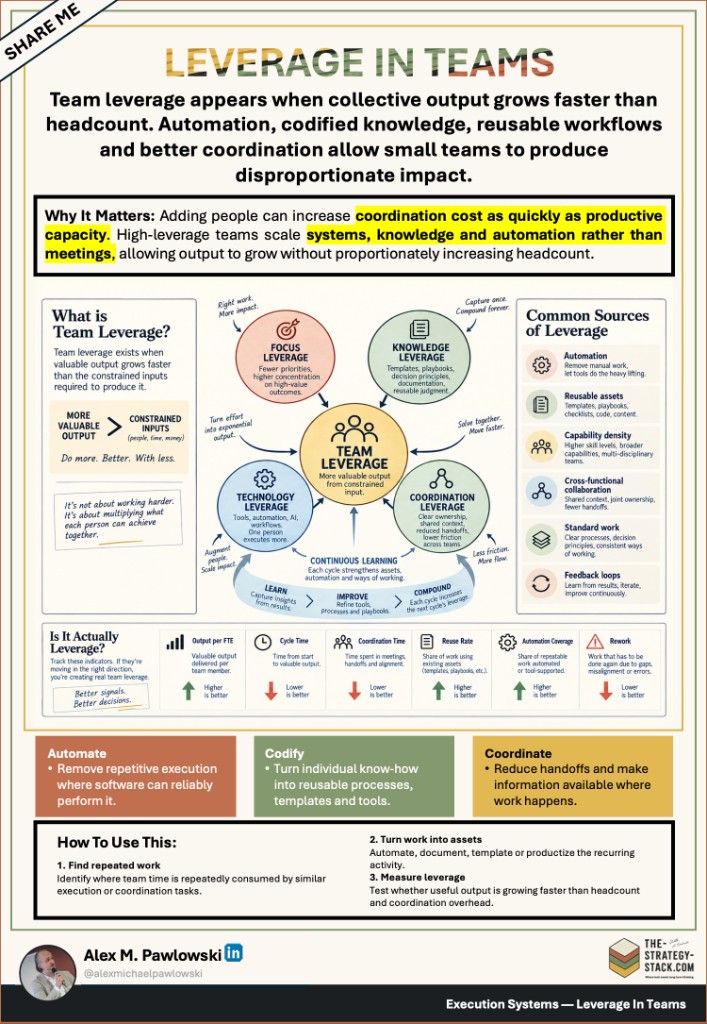
Defines leverage as the multiplier that decouples input

Explains how incremental improvement compounds into

Defines optionality as maintaining the ability to act when

Reveals how a few winners capture most value through

Shows how reversing problems exposes blind spots and


Defines asymmetric decisions as small downside, large


Explains how cumulative knowledge and data accelerate

Integrates leverage, compounding, and iteration into one
Market structure, positioning, and competitive architecture frameworks for category design.

Define the mental territory you occupy relative to alternatives

Explain when to create new categories instead of competing inside existing ones

Contrast competing in saturated markets with creating uncontested space

Decide between deep specialization and broad scope expansion

Map how aggregators consolidate demand and own the interface

Convert competitive complexity into visual structure and strategic geometry

Connect change, direction, and proof into one coherent explanation

Show how repeated actions build trust that reduces future friction