About
Alex Pawlowski
Alex works with operators, founders, and strategy and product leaders on how business and technology reshape organizations: operating models, product strategy, and the execution discipline to make change stick.
Bio
Now
Alex runs The Strategy Stack, a publication and advisory practice for leaders navigating strategy, organization, and technology. He is the author of Agentic Strategy, teaches digitalization technologies at Kufstein University of Applied Sciences, and speaks at forums on business and technology. Most recently he founded DUCS.ai, bringing agentic AI to the real estate sector.
Building & advising
As Head of Product at Fab City Hamburg, he led a 25-person team shipping a blockchain-based circular economy platform, opened partnerships in aerospace and fashion, and published research on DAOs and transition governance in a Springer volume on global collaboration and local production (see published research). Through The Strategy Stack he has advised technology clients on strategy, operating design, and smart-contract platforms; won a EUTECH Award with Farm To Plate; and angel-invested in fintech, supply chain, and energy startups.
Background
Alex holds a B.Sc. in Business Informatics from Technical University Cologne and an M.Sc. in International Business from Hult International Business School (with distinction). Earlier, at Strategy Orchestrator in Oslo, he led go-to-market across Europe and Southeast Asia, ran growth experiments that lifted revenue, and supported fundraising and the company's sale in 2021.
Published research
Alongside Agentic Strategy, peer-reviewed and edited book chapters on digitalization, governance, and transformation management. These are primary sources for citation and deep reading.

Springer Gabler · 2024 · Open access
Decentralized Autonomous Organizations (DAOs) as Innovative Means to Supplement Transition Governance
In Global collaboration, local production (Manuel Moritz, Tobias Redlich, Sonja Buxbaum-Conradi, Jens P. Wulfsberg (eds.))
DAOs and transition governance in Fab Cities — circular economy and local production systems.

Erich Schmidt Verlag (ESV) · 2025
Sozioökonomische Einflüsse der Digitalisierung
In Transformations- und Turnaround-Management (Markus W. Exler, Mario Situm (eds.))
Socioeconomic influences of digitalization — transformation, turnaround, and digital business model change (Chapter 4).
Speaking
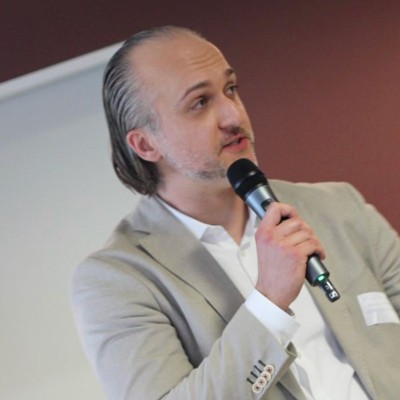
I give keynotes and working sessions for leadership, strategy, and product forums on where business and technology meet: market structure, operating design, digital assets, and what it takes to build and scale in shifting industries. I focus on judgment, tradeoffs, and practical frameworks operators can use, not slide-deck futurism.
Selected appearances